You may be exhausted after leaving an abusive relationship, or you may still be inside it, trying to name what's happening while managing work, family, money, and fear. Perhaps the crisis has ended, but your body hasn't received the message. Sleep remains difficult, ordinary disagreements feel dangerous, and you keep wondering why you can't “get over it.”
Healing from abuse is not a single decision or a straight line. It's a paced process that usually involves creating safety, stabilizing the body and daily life, processing what happened, and gradually rebuilding an identity beyond survival. These phases can overlap, repeat, or briefly reverse when a new trigger, loss, or practical problem appears.
The point isn't to force yourself toward a finish line. The point is to match support to what you need now, with treatment that recognizes trauma rather than blaming you for its effects. A trauma-informed mental health approach can help replace white-knuckling with a plan that respects your pace, safety, and whole life.
Table of Contents
- What Healing from Abuse Actually Looks Like
- How Abuse Reshapes the Brain and Body
- The Four Phases of Recovery Most Survivors Move Through
- Evidence-Based Therapies That Actually Reduce Trauma Symptoms
- Matching the Level of Care to Where You Are
- Practical Safety Planning and Life Rebuilding
- How Families Can Help Without Causing More Harm
- Rethinking Forgiveness and Moving On
What Healing from Abuse Actually Looks Like
Healing often begins in a confusing place. You may feel relief and grief at the same time. You may miss someone who harmed you, question your memory, or feel worse after leaving because the constant demands of survival have finally quieted enough for emotions to surface. None of these reactions proves that you made the wrong choice.
A useful roadmap has four broad phases:
- Safety, reducing active danger and creating physical, emotional, and relational protection.
- Stabilization, learning to manage sleep, emotions, body sensations, cravings, and daily responsibilities.
- Processing, working with a trained therapist to make sense of trauma memories without becoming overwhelmed.
- Reintegration, rebuilding relationships, values, confidence, pleasure, and a future that isn't organized around the abuse.
These phases aren't clinical boxes you must complete in order. Someone may be physically safe but financially unstable, or emotionally ready to process one memory while still needing help with panic and sleep. A setback during processing doesn't erase the safety skills you've already developed.
Why gradual progress matters
Research on sexual assault recovery illustrates why quick-fix expectations can be harmful. In a meta-analysis of 22 samples involving 2,106 survivors, 74.58% met criteria for PTSD at one month, compared with 41.49% at 12 months. The same research reported 81% had significant PTSD symptoms one week after the assault, and estimated recovery slowed after the first three months (meta-analysis of PTSD after sexual assault).
Those findings don't predict your personal course. They do show that symptoms can decline gradually while remaining serious for many survivors. Recovery may involve months of stabilization, treatment, support, and repeated practice. The question isn't “Why am I not done?” It's “What would help me feel safer and more capable this week?”
How Abuse Reshapes the Brain and Body
A person may leave an abusive situation yet still react as if danger is nearby. The nervous system can function like a smoke alarm stuck in the on position. It once helped detect threats, anticipate someone's mood, freeze during danger, or adapt quickly enough to survive the moment. Afterward, the alarm may keep sounding even in a safe room.
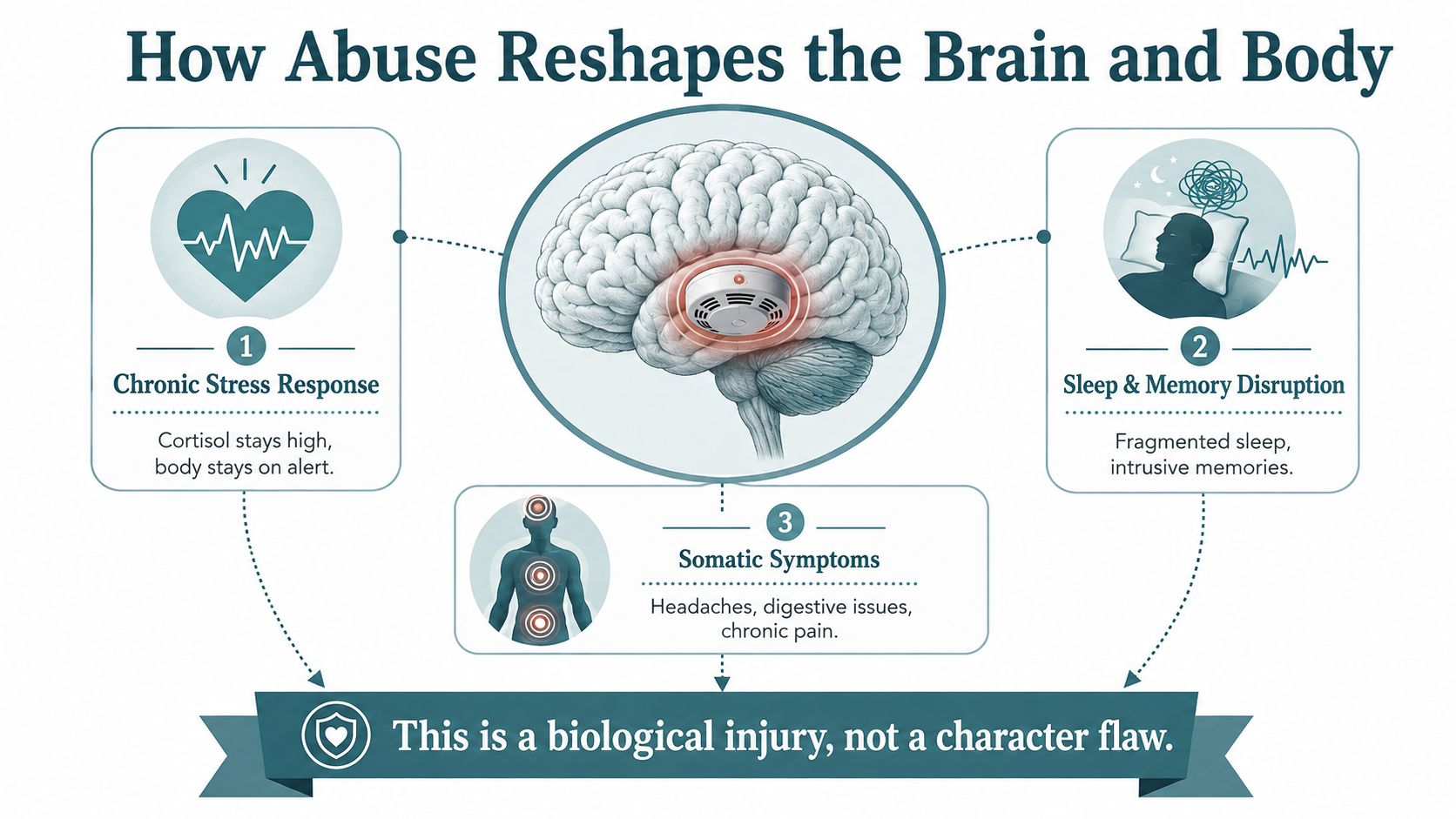
Hypervigilance may involve repeatedly checking a phone, studying a partner's expression, or rehearsing every conversation to prevent conflict. Dissociation can feel like numbness, unreality, lost time, or observing yourself from far away. Sleep problems, intrusive memories, emotional flooding, irritability, and physical pain may arise from the same survival system staying activated.
Survival responses are not character flaws
During abuse, these reactions may have reduced escalation or helped you remain alert. Freezing was not consent. Appeasing was not weakness. Difficulty making decisions did not prove a lack of courage. Your body was adapting to the conditions in front of it.
Trauma may not explain every symptom, so new or severe physical changes deserve medical attention. Shame, however, rarely helps the nervous system settle. Treatment teaches the brain and body different responses, similar to how physical rehabilitation gradually restores movement after an injury.
Recovery often starts with small, repeatable signals of present safety. You might place both feet on the floor, name objects in the room, lengthen an exhale, eat regularly, limit contact with unsafe people, or ask someone trustworthy to stay nearby. These actions do not erase what happened. They create enough steadiness to approach memories without asking the body to carry more than it can manage that day.
The Four Phases of Recovery Most Survivors Move Through
The four-phase model is a map, not a staircase. You can revisit an earlier phase whenever circumstances change, and you don't need to prove that you're “ready” by tolerating more distress than your body can manage.
Safety
Safety means stopping active harm and reducing the conditions that keep you braced. For someone leaving a relationship, that might involve securing identification documents, changing communication channels, arranging a safe place to stay, or creating boundaries around contact. For someone still living with an abusive person, safety may begin with confidential advocacy and a plan that doesn't increase immediate risk.
Inside, safety can feel less like peace and more like uncertainty. A predictable therapist, supportive friend, or consistent routine can help your body learn that not every interaction requires defensive preparation.
Stabilization
Stabilization is the practical work of becoming more able to function. You may learn grounding skills, emotion regulation, sleep routines, medication management, relapse-prevention strategies, or ways to handle a difficult conversation without shutting down.
A survivor might notice that they can sleep for a longer stretch, return a phone call without panicking, or identify a trigger before reacting. Those are meaningful changes, even if painful memories remain.
Practical rule: If processing leaves you unable to stay present, care for yourself, or remain safe, more stabilization may be needed before deeper trauma work.
Processing
Processing means making sense of memories, beliefs, sensations, and losses with appropriate support. A therapist may use EMDR, cognitive processing therapy, or another trauma-focused approach to work with a specific memory rather than asking you to retell everything at once.
The aim isn't to approve of what happened or forget it. It's to reduce the memory's power over your present, challenge beliefs such as “I caused this,” and help you distinguish past danger from current circumstances.
Reintegration
Reintegration is the gradual return to a fuller life. You might rebuild friendships, explore interests, date cautiously, make independent decisions, return to education, or develop a sense of identity that isn't centered on managing another person.
Progress can be quiet. Saying no without a long explanation, trusting a consistent person, or enjoying an activity without guilt may signal that your life is expanding. The past remains part of your history, but it no longer has to organize every choice.
Evidence-Based Therapies That Actually Reduce Trauma Symptoms
Choosing therapy can feel overwhelming because the names sound like a list of competing brands. A better question is: What problem does this treatment target, and can the therapist adjust the pace when I become overwhelmed?
A systematic review and meta-analysis of 98 randomized controlled trials involving 5,567 participants found that EMDR and cognitive processing therapy had the strongest long-term effects at six-month follow-up, with moderate-to-large effect sizes and moderate heterogeneity (systematic review of psychological treatments for PTSD). In practical terms, the evidence supports structured trauma treatment when the goal is durable reduction in intrusive memories, avoidance, and hyperarousal, rather than relying only on unstructured supportive conversation.
| Modality | Primary Target | Best Fit | Session Rhythm |
|---|---|---|---|
| Cognitive Behavioral Therapy | Trauma-related thoughts, avoidance, and behavior patterns | People who want practical skills and help testing beliefs | Weekly or adjusted to stability |
| EMDR | Distressing memories and their emotional or physical charge | Survivors who can remain grounded with carefully paced memory work | Structured sessions with preparation and follow-up |
| Dialectical Behavior Therapy | Emotion regulation, distress tolerance, and relationship skills | People experiencing intense emotions, impulsivity, or self-harm risk | Individual therapy often paired with skills practice |
| Brainspotting | Body-based and nonverbal trauma responses | People who struggle to explain experiences entirely through words | Therapist-guided, paced sessions |
| Motivational Interviewing | Ambivalence about change, including substance use | People who feel conflicted about treatment or reducing harmful coping | Flexible, collaborative conversations |
| Art therapy | Expression, meaning-making, and nonverbal processing | Survivors who communicate more easily through creative work | Integrated into a broader treatment plan |
These approaches can complement one another. Someone with trauma and substance use may need motivational interviewing and relapse-prevention work while building stabilization skills, then add EMDR when they can tolerate processing. A trauma-informed program may also include psychiatric evaluation, medication management, individual therapy, small groups, and family education.
Before starting, ask how the clinician handles dissociation, panic, substance use, and pacing. Ask what happens if symptoms intensify between sessions. You can also review best practices for trauma treatment and bring questions to an intake rather than assuming every trauma therapist works the same way.
Matching the Level of Care to Where You Are
Outpatient therapy, Intensive Outpatient Programs, and Partial Hospitalization Programs aren't interchangeable. They form a step-down ladder, and the right level depends on safety, symptom intensity, daily functioning, medical needs, and the support available outside treatment.
Standard outpatient care
Weekly outpatient therapy may fit when you can maintain basic safety, attend appointments, and use coping skills between sessions. It offers continuity while you work, attend school, care for children, or manage other responsibilities. A psychiatrist or primary care clinician may also be part of the plan when medication, sleep, or physical symptoms need attention.
Intensive Outpatient Programs
IOP provides more frequent clinical contact than standard therapy while allowing you to live at home or in supportive housing. It can help when symptoms interfere with work, relationships, or sobriety but you don't need full-day programming. Groups may focus on trauma education, emotion regulation, relapse prevention, communication, and practical planning.
Partial Hospitalization Programs
PHP offers full-day structured clinical programming without requiring an inpatient stay. A typical day can include skills groups, process groups, individual therapy, psychiatric support, medication management, and coordinated planning for the hours outside treatment.
Stepping up isn't failure. It may be appropriate after escalating symptoms, relapse, inability to function, or a worsening safety situation. Stepping down can be appropriate when you're consistently using skills, maintaining stability, and benefiting from greater independence.
When conditions overlap
Substance use, depression, anxiety, eating disorders, chronic pain, and trauma often interact. Treating only one condition while postponing the others can leave the main cycle intact. Integrated dual-diagnosis care addresses co-occurring needs concurrently, with one treatment plan rather than disconnected providers working in sequence.
Practical Safety Planning and Life Rebuilding
Leaving an abusive household does not always end the risk. An adult may still share finances, children, housing arrangements, or family connections with the person who caused harm. During the first week, safety may involve securing documents, creating a safer email account, checking device privacy, choosing a confidential contact, and identifying where urgent help is available.
A plan must match the situation. Changing passwords, blocking contact, or announcing an intention to leave can increase danger in some circumstances. A domestic-violence advocate can help build a quieter strategy. Legal advocates, immigration specialists, and medical professionals may also help address custody, housing, finances, or immigration status.
Stability makes treatment more usable
Trauma processing is harder when someone is worried about shelter, food, transportation, or income. Housing and economic security support the nervous system's return to steadier functioning and make regular treatment easier to maintain. These needs belong in the recovery plan, alongside therapy and medical care.
A recovery framework describes healing as becoming safe, healthy, resilient, and economically secure, rather than only reducing symptoms (holistic recovery after domestic violence). The evidence still has important gaps. A 2023 priority-setting study gathered 484 proposed uncertainties from 223 participants and organized them into 75 unanswered questions, showing that survivors and professionals need clearer guidance about effective support after abuse. Practical planning should therefore remain flexible, with room to adjust when safety, symptoms, substance use, or living conditions change.
A next-week checklist
- Secure essentials: Gather identification, medication information, financial records, and important contact details.
- Protect communication: Choose safer channels and review who can access location data, accounts, and messages.
- Name practical needs: List housing, transportation, childcare, legal, and income concerns.
- Build a support circle: Choose people who believe you, protect confidentiality, and will not pressure contact or reconciliation.
- Request an assessment: Ask a trauma-informed provider to consider trauma symptoms, substance use, mood, sleep, and physical concerns together.
Rebuilding rarely follows a straight line. A setback may signal that the plan needs more support, not that recovery has failed. Small choices that increase safety and control can create the conditions for later processing and reintegration.
How Families Can Help Without Causing More Harm
A survivor may arrive at a family member's door frightened, uncertain, and still emotionally attached to the person who caused harm. Families often want to fix everything quickly. What helps more is steady support without control.
Listen without investigating. You do not need to judge whether every detail fits your definition of abuse before offering care. Try, “I believe you,” “You did not deserve that,” or “What would feel helpful today?” Questions such as “Why did you stay?” can shift responsibility onto the person who was managing danger.
Helpful support sounds like this
- Respect the pace: Let the survivor choose what to disclose and when.
- Offer concrete help: Provide transportation, meals, childcare, document storage, or company at an appointment.
- Support treatment: Encourage attendance without requesting a report about every session.
- Protect autonomy: Ask before contacting someone, sharing information, or making plans.
- Accept mixed feelings: Relief, grief, anger, attachment, and doubt can exist together.
Family support should change with the survivor's needs. During safety and stabilization, practical help and calm communication may matter most. During trauma processing, relatives can listen without demanding details. During reintegration, they can respect new boundaries as the survivor rebuilds routines, relationships, and independence. If substance use, depression, or another concern is present alongside trauma, support should include professional care for both issues rather than treating either one as a character flaw.
Pressure to forgive, minimize the abuse, or confront the person who caused harm can increase fear and isolation. Family members need support too, because anxiety can lead to overstepping or turning every conversation into an emergency.
A structured psychoeducation program for families can explain trauma responses, strengthen communication, and provide a safer place for questions. If a loved one attends PHP or IOP, ask whether family education, therapy, and ongoing communication are part of care.
A useful opening script is: “I'm here with you. I won't pressure you to decide on my timeline. Would you like listening, practical help, or help finding professional support?”
Rethinking Forgiveness and Moving On
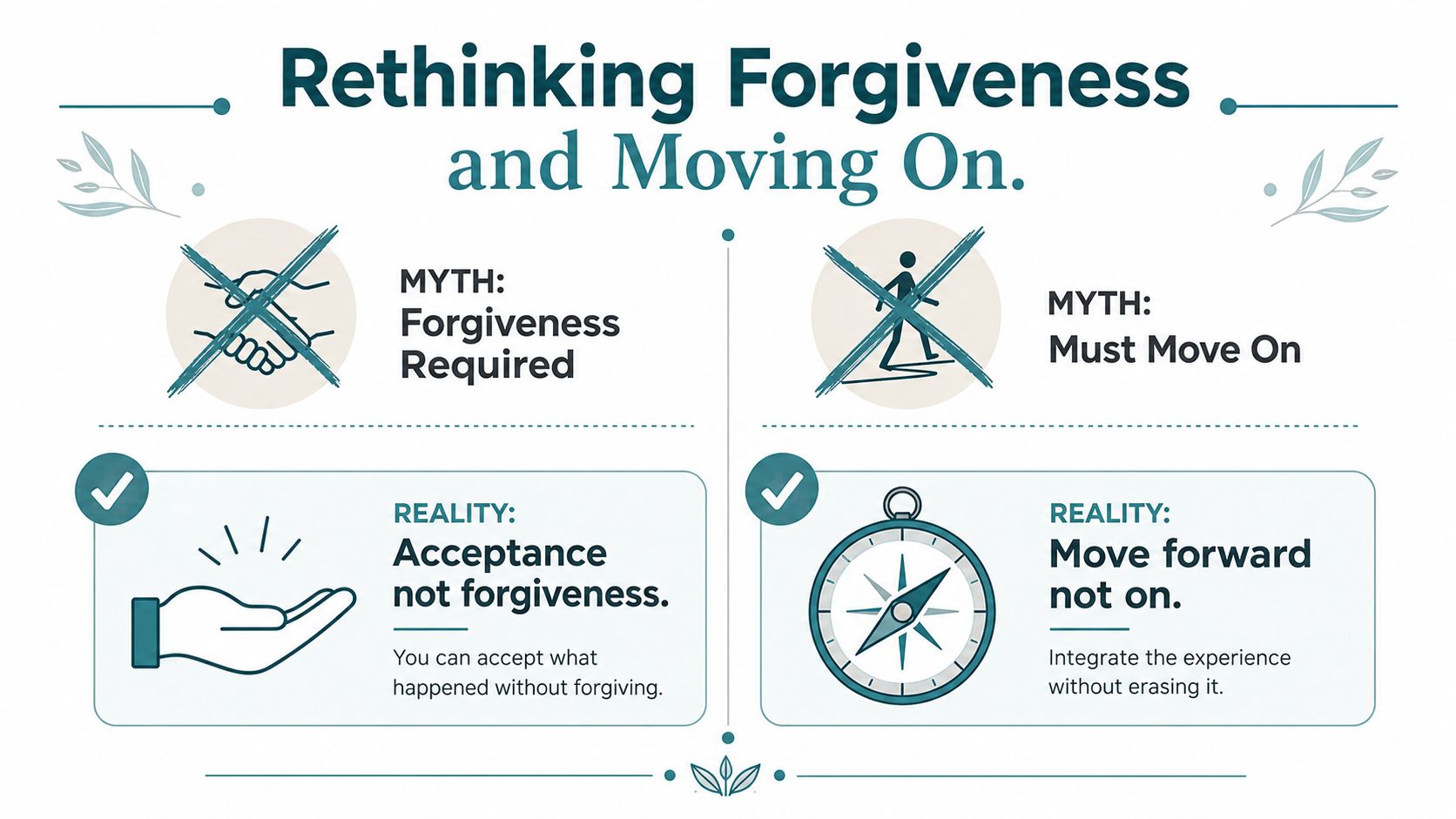
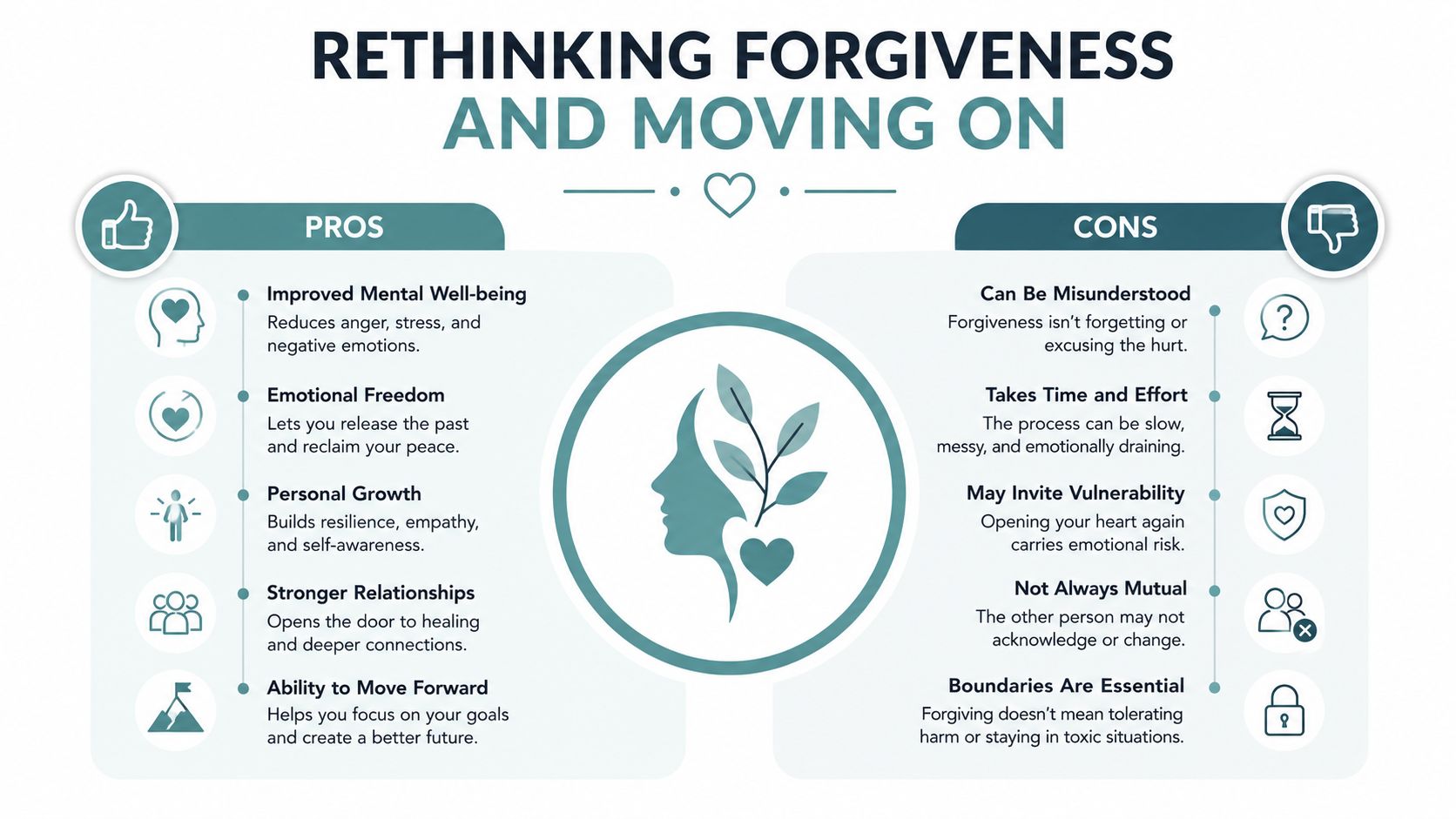
A survivor may feel pressure to forgive while still checking the locks, avoiding contact, or trying to sleep through intrusive memories. Forgiveness is not a treatment requirement. Some survivors choose it, some do not, and feelings may change over time. Healing can focus on boundaries, acceptance, self-trust, and rebuilding a life without forgiving the person who caused harm.
Forgiveness and acceptance describe different choices. Acceptance can mean acknowledging that the abuse happened, that it was wrong, and that the other person's actions cannot be controlled. It does not mean approving the abuse, restoring contact, abandoning accountability, or acting as if the consequences no longer matter.
Pressure to forgive can become another demand placed on the survivor. Relatives or communities may use forgiveness to push reconciliation, making their comfort seem more important than your safety. A clear boundary can support recovery more directly than a declaration of emotional closure: “I'm not available for contact,” “I won't discuss this with you,” or “You can't come to my home.”
“Moving on” can also suggest that recovery means erasing the experience or performing happiness on someone else's schedule. Moving forward may mean carrying the history differently while choosing relationships, work, routines, and values that reflect who you are now. Progress may look ordinary: sleeping more consistently, making an independent decision, noticing a warning sign, or leaving a conversation before becoming overwhelmed.
Recovery is rarely a straight line. Symptoms may remain significant after the immediate crisis, and improvement can slow after the early months, as earlier findings on sexual assault recovery indicate (sexual assault recovery findings). A difficult day is information, not a verdict. It may show that contact increased, sleep declined, a memory was activated, or your current level of care needs adjustment. If depression, substance use, anxiety, or another condition is present alongside trauma, the plan may need to address both rather than treating either concern as a personal failure.
Turn the roadmap into action
Identify the need that is most urgent now. If danger is active, prioritize confidential safety planning. If you are safe but overwhelmed, request stabilization support. If you can stay present with difficult material, ask about trauma-focused treatment. If daily life is becoming steadier, focus on relationships, work, health, and independent choices. These phases can overlap, and a setback may mean returning briefly to safety or stabilization rather than starting over.
Gather your medical and insurance information, then request an assessment covering trauma, mood, anxiety, substance use, eating concerns, sleep, and physical symptoms. Ask providers:
- What trauma therapies do you offer?
- How do you handle dissociation or emotional flooding?
- Can you treat substance use or other co-occurring conditions at the same time?
- What level of care fits my current functioning?
- How will my family be involved, if I want them involved?
At an outpatient center such as Casa Recovery in San Juan Capistrano, admissions may include insurance verification, a clinical assessment, a facility tour, family-program information, and coordination of supportive living for clients coming from outside the area. Ask the admissions team to explain PHP, IOP, mental health, trauma, psychiatric, and dual-diagnosis services in relation to your needs. A program label alone cannot show whether the care fits your current safety, stability, and daily functioning.
Reaching out is itself a phase-one act. It does not commit you to forgiveness, reconciliation, a specific diagnosis, or a fixed timeline. It creates the possibility of taking the next safe step.
Casa Recovery offers trauma-informed outpatient care for adults through PHP and IOP, with individual therapy, group support, psychiatric services, family programming, and integrated dual-diagnosis treatment. If you want to discuss what healing from abuse could look like at your current level of need, visit Casa Recovery to request an assessment and learn about your options.