You wake up tired, your chest is tight before the day even starts, and the simplest tasks feel heavier than they should. That pattern often isn't “just stress” or “just sadness.” It's the overlap of anxiety and depression, and the practical answer is usually a structured plan that treats both together, not one at a time.
The need for that kind of care is real. In the U.S., the CDC reported that in 2022 about 18.2% of adults had symptoms of anxiety and 21.4% had symptoms of depression in the past 2 weeks, while a large U.S. study found only 30.4% of adults with depressive or anxiety disorders received at least one appropriate treatment, with access under 35% overall for adults with either disorder (CDC/NCHS report). For many people, the right treatment path is outpatient, stepped, and integrated.
Table of Contents
- Recognizing When Anxiety and Depression Overlap
- Getting a Clear Diagnosis Through Psychiatric Assessment
- Choosing the Right Level of Outpatient Care
- Evidence-Based Therapies That Target Both Conditions
- Medication Management and the Path to Remission
- Building Coping Skills and Preventing Relapse
- Accessing Treatment and Navigating Insurance
Recognizing When Anxiety and Depression Overlap
A lot of people do not notice the overlap right away. They think they're dealing with panic, then the panic leaves them exhausted, flat, and unable to care about anything. Or they assume they're “just depressed,” but the problem is that constant worry is draining their energy, sleep, and concentration.
That mix shows up in ordinary life before it shows up neatly in a diagnosis. You cancel plans because you're overwhelmed, then feel guilty and withdraw more. You can't sleep because of racing thoughts, then drag through the next day feeling hopeless and irritable.
Practical rule: when worry and low mood keep feeding each other, treating them as separate problems usually misses the point.
Substance use can complicate the picture fast. Alcohol or recreational drugs can worsen anxiety and interfere with treatment, which is why dual-diagnosis care matters when symptoms and coping patterns start colliding (ADAA treatment guidance). People often search for a simple checklist, but what they really need is a plan that looks at mood, anxiety, sleep, substances, and daily function together.
That's also why generic self-help advice often falls short. If a person is withdrawing, ruminating, using substances to get through the evening, and skipping work, the issue is not one symptom in isolation. It's the interaction between symptoms, habits, and stressors, and that interaction usually needs structured outpatient care.
Getting a Clear Diagnosis Through Psychiatric Assessment
A good treatment plan starts with a careful assessment, not a guess. Anxiety can show up as restlessness, muscle tension, racing thoughts, panic, avoidance, or constant reassurance-seeking. Depression can present as sadness, numbness, irritability, slowed thinking, poor motivation, or loss of pleasure, and the two often blur together until the clearest sign is a drop in daily function.
What a real psychiatric assessment sorts out
A thorough evaluation asks what started first, what worsens symptoms, and what has already been tried. It also looks at whether depression is primary or secondary to chronic anxiety, trauma, grief, sleep disruption, or substance use. Medication history matters too, because past side effects, partial responses, or abrupt stops can shape what comes next.
Onsite psychiatry can help. When the prescriber and therapist are working from the same clinical picture, the plan is easier to adjust as symptoms change, and one clinician is less likely to miss what another already saw. Casa Recovery's psychiatric service page describes that kind of coordination in an outpatient setting through psychiatry for mental illness treatment.
A good assessment also screens for dual-diagnosis issues that can distort the picture. Alcohol, cannabis, stimulants, or sedatives can all blur symptom patterns, and withdrawal or rebound symptoms can look like worsening anxiety or depression. In practice, that means the diagnostic interview has to cover substance use, sleep, safety, and functioning in the same conversation, because a narrow mood check misses too much.
Why measurement matters
Clinicians do not rely on vague improvement. They track symptom severity over time, because progress can stall if everyone is only judging by “feeling a little better.” If anxiety starts easing but depression stays heavy, the plan should shift.
That measurement-driven approach matters because symptoms evolve. Someone can arrive with panic and insomnia, then later see that hopelessness and avoidance are the bigger obstacles. A solid assessment leaves room for that change instead of locking the person into a one-size-fits-all label.
Choosing the Right Level of Outpatient Care
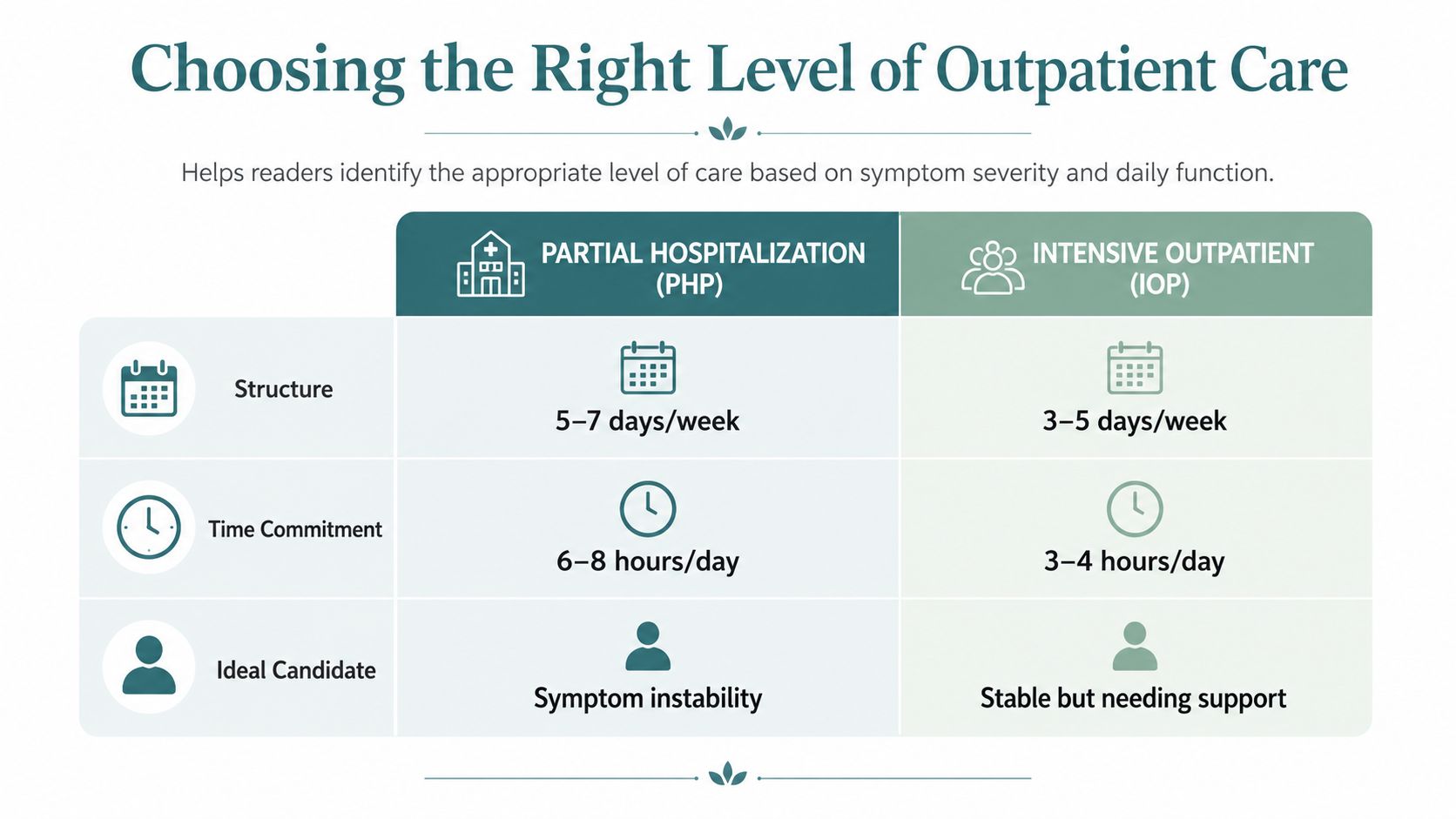
Weekly therapy is enough for some people, but not for everyone. When symptoms are unstable, sleep is collapsing, or daily responsibilities are slipping, a higher level of outpatient care can provide enough structure to stop the cycle from deepening.
The difference between PHP and IOP is mostly about intensity and containment. Partial Hospitalization Program (PHP) is the more intensive option, with full-day clinical structure for people who need stabilization. Intensive Outpatient Program (IOP) is lighter, with multiple sessions per week and more room to keep working, studying, or rebuilding daily routines. Casa Recovery's overview of difference between IOP and PHP fits that stepped-care logic.
When PHP makes more sense
PHP is often a fit when symptoms are interfering with basic functioning, when someone is decompensating between weekly sessions, or when substance use is making outpatient care harder to hold together. The goal is not to “intensify forever,” it's to stabilize enough that the person can participate in therapy and make decisions without being overwhelmed.
A higher structure can prevent the common pattern where someone improves for a week, then falls apart because there's no support around the next trigger. That's especially important early in recovery, when motivation is uneven and daily coping skills are still forming.
Why IOP is often the next step
IOP works well as a step-down. It gives people enough contact to stay accountable while they practice living more normally. They can test new routines, keep therapy momentum, and return to work or family roles without being left entirely on their own.
The right level of care is the one that matches your current function, not the one that sounds easiest to tolerate.
That's the trade-off. Too little structure invites relapse. Too much structure can make reintegration harder than it needs to be. A step-down model aims for the middle, more support than weekly outpatient visits, less disruption than all-day care.
Evidence-Based Therapies That Target Both Conditions
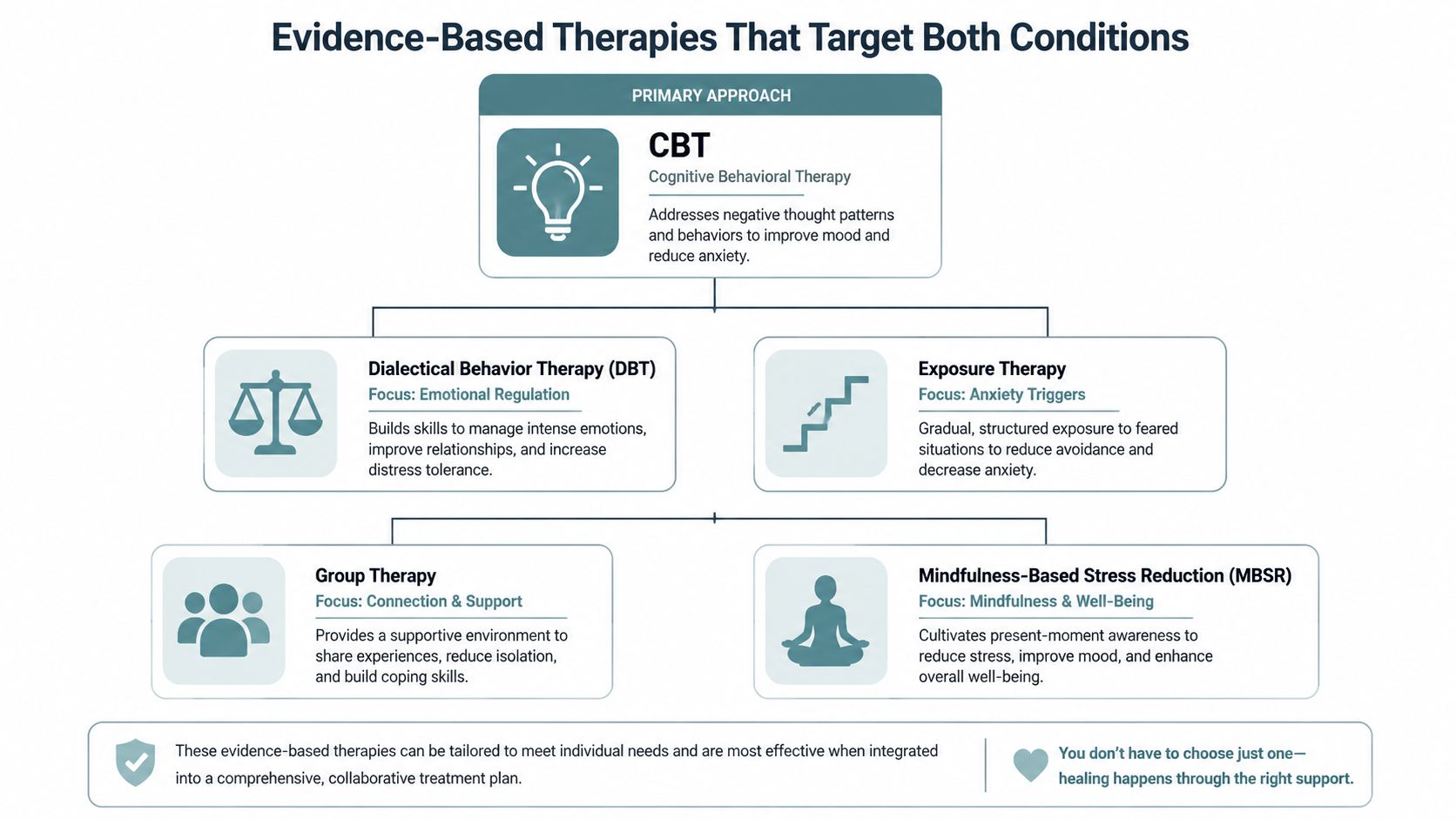
A newly diagnosed adult with anxiety and depression often needs more than weekly reassurance. The treatment has to interrupt avoidance, reduce reactivity, and rebuild daily functioning at a pace the person can sustain. Cognitive Behavioral Therapy (CBT) remains the clearest first-line psychotherapy for co-occurring anxiety and depression because it targets the loop that keeps both conditions active. The World Health Organization says the interventions with the strongest evidence for anxiety disorders are based on CBT principles, including exposure therapy, and it also notes that psychological interventions are important for anxiety disorders (WHO anxiety disorders fact sheet). That matches what clinicians see in outpatient care, because anxious thoughts often worsen depressed behavior, and depressed avoidance often reinforces anxiety.
CBT, DBT, and trauma-informed work
CBT helps people test catastrophic thinking, reduce avoidance, and rebuild routines that support mood. In dual-diagnosis work, it also gives structure to the day-to-day decisions that often break down when both anxiety and depression are present. DBT adds a different layer, especially when emotions swing hard or distress tolerance is low. It gives people concrete tools for regulation, crisis survival, and staying engaged when feelings are intense.
Trauma changes the treatment plan. EMDR and Brainspotting can be useful when anxiety and depression are being driven by unresolved traumatic experiences, especially when the body reacts before the mind can make sense of what is happening. In those cases, therapy has to be paced carefully so the person does not get flooded and quit. For some people, that pacing is easier in a higher-support setting, then easier to maintain as care steps down from PHP to IOP.
Small groups and practical supports
Small-group therapy often works well alongside individual sessions because it adds accountability and reduces isolation. People hear other members describe the same avoidance, shame, or spiraling thoughts they have been hiding, and that alone can lower the sense of being the only one struggling.
One useful add-on for nervous-system regulation is achieve calm with Sensate, which some people use as part of a broader self-soothing routine. I would treat that kind of tool as supportive, not curative, something that complements therapy rather than replacing it.
The strength of these therapies is coordination. CBT changes thinking and behavior. DBT improves regulation. Trauma-focused work addresses the deeper trigger patterns. Together, they fit better than reassurance alone, especially for someone moving through a step-down outpatient plan that starts with structure and gradually shifts toward independence.
For people whose anxiety and depression overlap with postpartum symptoms, how to deal with postpartum anxiety can shape the therapy plan as well, because the clinical priorities often include sleep disruption, intrusive worry, and a limited window for recovery time. Casa Recovery's psychiatric medication management can also be part of that coordinated approach when therapy alone is not enough, especially in dual-diagnosis cases where symptoms are pulling in different directions.
Medication Management and the Path to Remission
A new prescription should come with a plan, not just a refill. In outpatient care, medication works best when it is tied to symptom targets, side effects, follow-up timing, and a clear decision point for whether the drug is helping enough. The CDC notes that many people with depression benefit from psychotherapy and antidepressant medication, and that antidepressants may take up to 4 weeks to deliver their most benefit (CDC depression treatment guidance). For anxiety disorders, SSRIs are commonly used in adults, while benzodiazepines are generally avoided for long-term use because of dependence risk and limited durability of benefit.
Why remission matters more than partial improvement
People often stop too soon once they feel “better enough.” That is a common reason symptoms return. Expert review guidance says the goal should be remission, not partial response, and treatment should be changed after about 6 weeks if there is little or no response (PMC review on anxiety and depression treatment).
For adults with co-occurring anxiety and depression, the treatment sequence matters. One review recommends getting anxiety under control first, then pushing toward full depressive remission, and continuing antidepressant treatment for 4 to 5 months after remission to lower relapse risk (PMC review on combined treatment strategy). That approach fits real outpatient practice because symptoms often improve before the nervous system has fully stabilized. When medication is tapered before that stabilization, the old patterns can return quickly.
What to ask your prescriber
Clinical question to ask: “Are we treating for symptom reduction, or are we treating until remission?”
That question keeps the visit focused on the actual target. It opens the door to discussing dose changes, early side effects, sleep changes, and how medication fits with therapy and the rest of the outpatient plan. If benzodiazepines were used for acute anxiety, they usually need a slow taper over several weeks, because withdrawal can be clinically significant.
For some people, the most useful next step is structured follow-up with Casa Recovery's psychiatric medication management, especially when anxiety, depression, and other diagnoses are all affecting day-to-day function. For adults whose anxiety and depression overlap with postpartum symptoms, [how to deal with postpartum anxiety](https://www.bornbir.com/blog/how-to-deal-with-postpartum anxiety) may also shape medication choices, because sleep loss, intrusive worry, and limited recovery time can change what is practical in the home setting.
A good outpatient medication plan is reviewed often enough to catch partial response, side effects, and relapse risk before the patient drifts back into crisis.
Building Coping Skills and Preventing Relapse
Improvement can be real and still fragile. In outpatient care, I often see people feel steadier, then stop using the habits that helped because life starts looking normal again. That is usually when symptoms creep back, especially if anxiety and depression have been treated together but daily routines have not caught up.
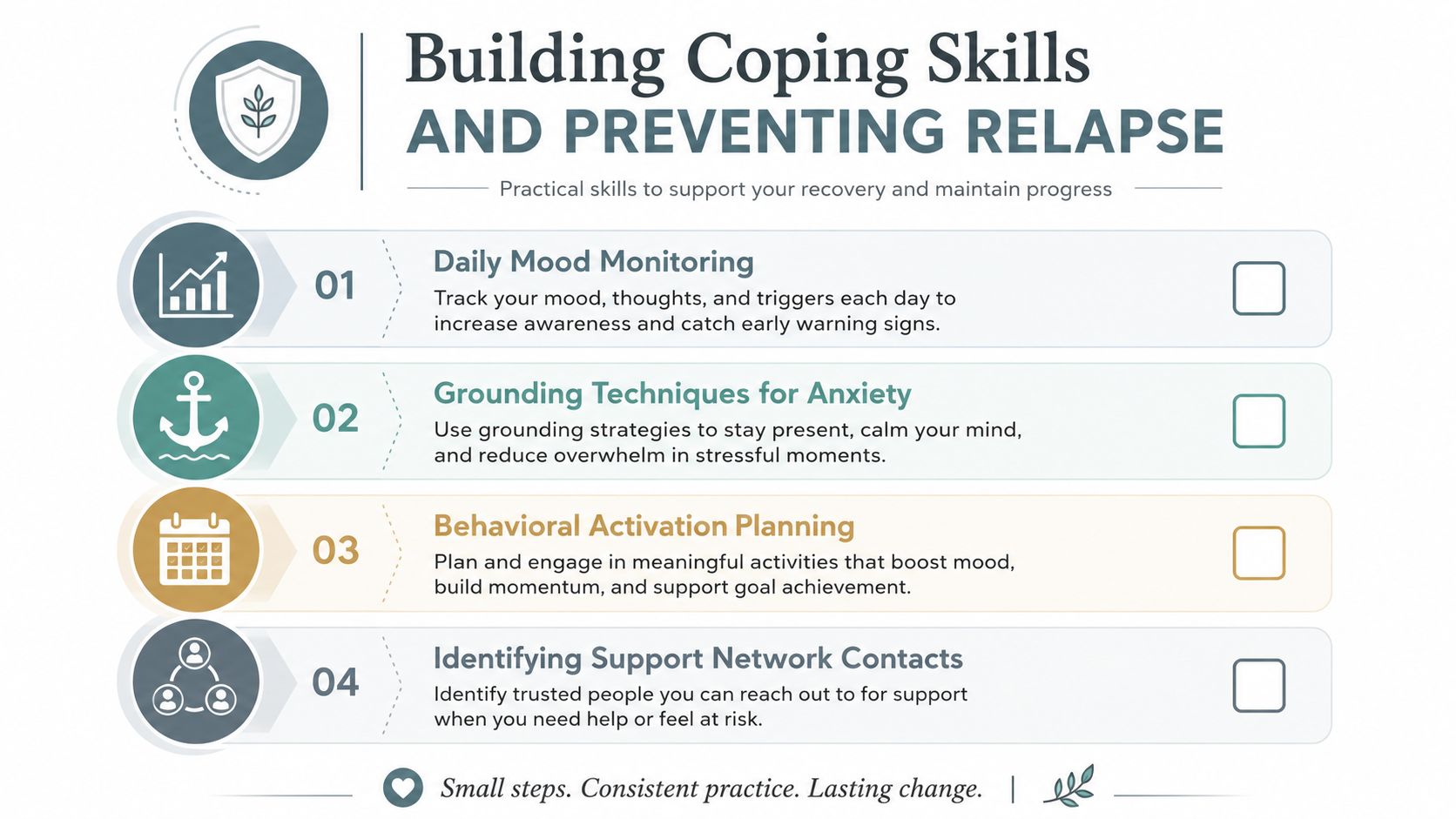
Relapse prevention works best when it stays concrete. The plan should cover what to do on an ordinary day, what to do when sleep slips, and what to do when motivation falls apart.
Four skills that actually hold up in real life
- Daily mood monitoring: Keep a simple record of sleep, anxiety spikes, mood shifts, and triggers. The point is not to track every feeling, it is to notice the pattern before it turns into a harder week.
- Grounding for acute anxiety: Use sensory focus, paced breathing, or a brief orienting exercise when panic starts climbing. The goal is to lower arousal before avoidance takes over the schedule.
- Behavioral activation: Schedule one small, doable action when depression makes everything feel pointless. A walk, a shower, a meal, or a call can restart momentum when energy is low.
- Support network contacts: Keep a short list of people you can contact when symptoms spike. Waiting until you feel overwhelmed often means you are already past the point of easy recovery.
These skills work better when they are written down and rehearsed during calmer periods. In dual-diagnosis care, I also want people to know which coping tools help when substance cravings, shame, or relationship conflict are part of the same flare-up.
Family support can change the temperature at home
A structured family program can help loved ones stop reacting to symptoms as if they are defiance and start responding in a calmer way. Families often need coaching on communication, boundaries, and how not to accidentally reinforce avoidance or substance use. That matters even more when home stress is feeding both anxiety and depression.
For people in pregnancy or the postpartum period, how to deal with postpartum anxiety is a useful adjunct read because sleep loss, intrusive worry, and limited recovery time change what coping looks like day to day. The core task stays the same, match the plan to the actual life setting instead of forcing a generic routine.
Know when the plan needs a higher level of care again
A relapse plan should name the warning signs that matter most, such as rising avoidance, missed appointments, worsening sleep, or a return to substance use. If those signs keep building, stepping back up to PHP or IOP is a correction, not a setback. That kind of step-up is common in real outpatient practice, especially when anxiety and depression are tied to stress, family strain, or untreated dual-diagnosis issues.
The best plans are simple enough to use on a bad day and specific enough to keep denial from taking over. They should also tell the patient exactly who to call, what symptoms mean “call now,” and when the next level of support is warranted.
Accessing Treatment and Navigating Insurance
Getting into treatment is often the hardest logistical step. People can recognize they need help, then get stalled by insurance questions, scheduling, and uncertainty about which program level is appropriate. A structured outpatient center should make that process clear from the first call.
What to ask before admission
Start with the basics, then move to the details that affect fit. Ask whether the program offers PHP, IOP, psychiatric evaluation, medication management, individual therapy, group therapy, and family support in one coordinated setting. Also ask how they handle dual-diagnosis needs, especially if alcohol or drug use is part of the picture.
Casa Recovery's model is built around outpatient mental health and co-occurring treatment in Orange County, and its site notes accepted PPO plans from all carriers, plus in-network relationships with Blue Shield of California, Blue Card, ComPsych, and Holman Group. It also coordinates supportive living options for out-of-area clients, which matters if someone needs a stable bridge while doing PHP or IOP.
How to evaluate fit during a call or tour
- Integrated care: Look for psychiatry and therapy that are coordinated, not siloed.
- Trauma-informed approach: Ask how the program responds when trauma is part of the anxiety-depression picture.
- Family involvement: Find out whether loved ones can be included in a structured way.
- Step-down planning: Ask what happens after stabilization, because discharge without a transition plan is where progress can slip.
If you're weighing outpatient treatment against the broader consequences of untreated symptoms, it can help to think beyond the individual and include the workplace context too. The workplace mental health ROI guide is useful for employers or families who need to understand why timely care matters.
A good admissions process should feel practical, not vague. You should leave the call knowing whether PHP, IOP, or another service matches your current function, what insurance is likely to cover, and what the first week will look like.
If you're trying to treat anxiety and depression together, Casa Recovery offers outpatient PHP and IOP, onsite psychiatry, trauma-informed therapy, and dual-diagnosis support in Orange County. If you need a structured next step instead of trying to manage this alone, visit Casa Recovery and ask what level of care fits your symptoms, schedule, and recovery goals.